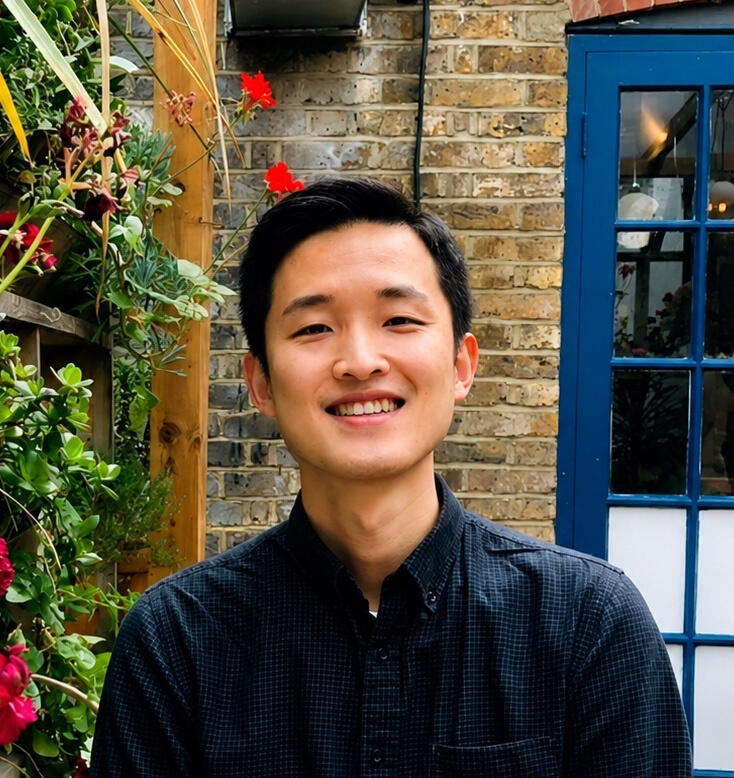
Woohyeok Seo
PhD candidate in International Relations
London School of Economics and Political Science (LSE)
Violence · Technology · Memory
International Relations of the Asia-Pacific
ABOUT
I am a final-year PhD candidate in International Relations at the London School of Economics and Political Science (LSE). My research asks how technologies of violence, memories of harm, and political order are mutually constituted, with a regional focus of the Asia-Pacific.
My work brings together nuclear politics, security studies, science and technology studies, memory studies, and historical international relations.
RESEARCH
Doctoral Project: Becoming (Un)Nuclear: Memory, Technology, and the Hierarchy of Nuclear Harm in Japan and South Korea (1945-1975)
This project examines how discourses of nuclear weapons and nuclear energy were co-constituted with collective memories of nuclear violence in postwar Japan and South Korea, from the 1945 Hiroshima and Nagasaki bombings through the 1954 Bikini incident and the nuclear tests that followed. Drawing on multilingual, multi-sited archival fieldwork across Hapcheon, Hiroshima, Nagasaki, Seoul, and Tokyo, and discourse tracing across 2,135 documents, it develops the concept of mnemonic nuclearity: the extent and manner in which discourses of nuclear technology and collective memories of nuclear violence constitute each other.
Reading that relation across the two cases, the project argues that this co-constitution produced a hierarchy of nuclear harm, a vertical ordering among nuclear harms and among the people who suffered them. The hierarchy took shape as the standing of one memory limited or eliminated that of another. It formed through two ways of representing nuclear harm that worked side by side. One remembered harm at the level of humanity, though that universal place was filled by particular instances of violence rather than by all of them. The other remembered only the harm suffered by a given political community. Together they drew boundaries by time, place, nationality, and technology.
The hierarchies formed by these two approaches entailed the (de)legitimation of the nuclear order. Which nuclear practice a memory could call into question was set by the hierarchy, so ranking memories also ranked which nuclear practices could be contested. In Japan, the memory of the 1945 bombings, specifically that of Japanese nationals among those harmed there, occupied the privileged place, and the challenge it carried was directed at testing, while the memory of those harmed by testing stood beneath it. In South Korea, no memory reached that privileged place, leaving nuclear practices contested on other grounds. The two orderings differed in form, but neither left room for a memory from which possession or nuclear energy could be called into question. The project therefore locates the legitimation of nuclear order in how memories of nuclear violence are ranked against one another.
Publications
Peer-reviewed Articles
• "Nuclear Technology and (De)politicising Memories of Nuclear Violence in Postcolonial South Korea (1945–75)." Cooperation and Conflict. 2026. Link.
• "East Asia’s Alliance Dilemma: Public Perceptions of the Competing Risks of Extended Nuclear Deterrence," with Lauren Sukin. Journal of Peace and Nuclear Disarmament, 2024 Link.
Edited Special Issue / Introduction
• Introduction to Special Issue, "Traversing Memories in Global Politics," Millennium: Journal of International Studies, with Kinti Orellana Matute and Pauline Zerla. 2025 Link.
Works in Progress
• An article introducing the concept of mnemonic nuclearity: theorizing how states legitimate nuclear technologies by shaping which forms of violence are remembered or excluded as nuclear harm.• An article on the politics of nuclear harm between universalism and particularism: examining how opposing national memories of nuclear violence can converge in excluding the same nuclear-harmed people.
Research Interests
Nuclear politics
Political violence
Weapons and technology
Collective memory
Historical international relations
Asia-Pacific international relations
TEACHING
I have taught international security and supported postgraduate dissertation writing in the International Relations Department (IRD) at LSE. My teaching emphasizes active learning, inclusive participation, and structured support for students’ research design, argumentation, and writing.
Teaching
LSE IR205 International Security, Graduate Teaching Assistant, 2023–2024LSE IR205 International Security, Guest Lecturer, “Artificial Intelligence and the Future of Strategic Competition,” 2024
Student Engagement
LSE IR485/499 Postgraduate Dissertations, Dissertation Surgeon, 2023–2025LSE IRD Incoming Undergraduate/Postgraduate Orientation, Welcome Coordinator, 2023–2025LSE IRD Postgraduate Dissertation Session, PhD Assistant and Panelist, postgraduate academic retreat at Cumberland Lodge, 2023 and 2025
CONTACT
For academic inquiries, teaching-related matters, or other professional correspondence, please contact me at: w.seo1 [at] lse.ac.uk